
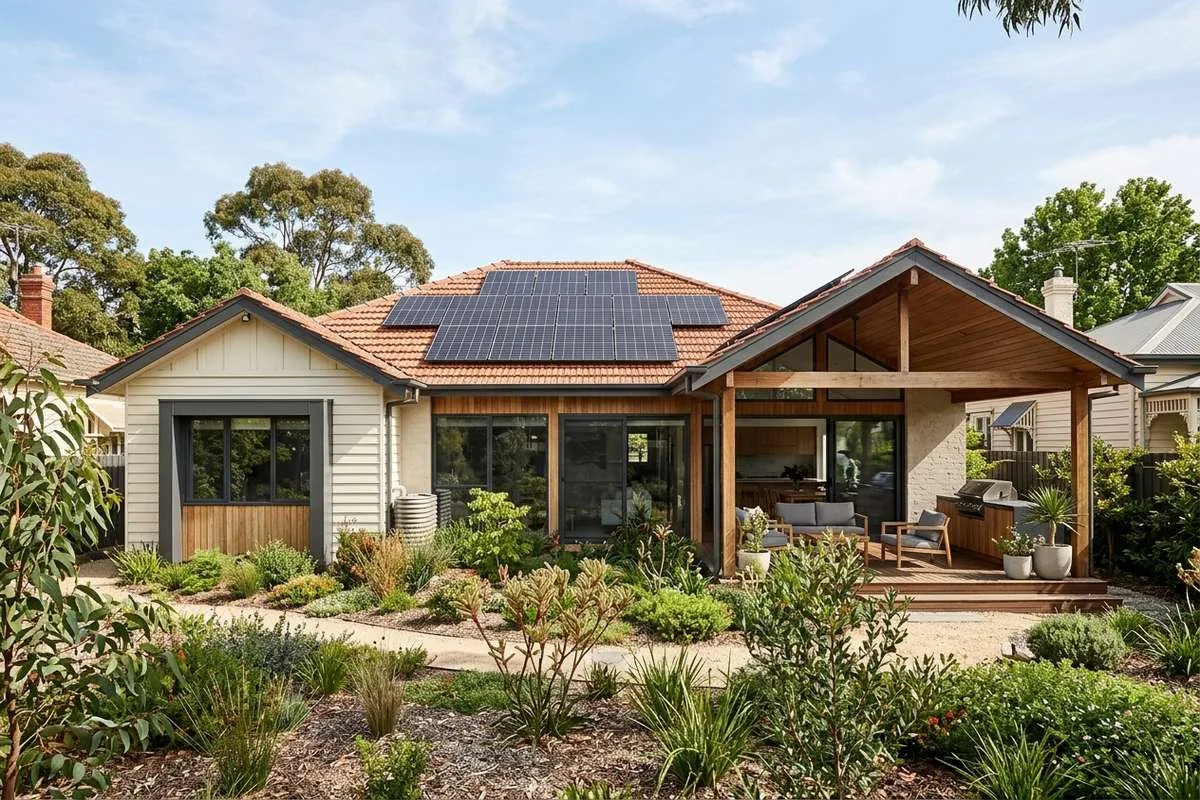
 Energy bills in Melbourne have climbed significantly over the past decade, and with the ongoing cost-of-living pressures, more homeowners are asking a simple question: how do I build a home that doesn’t cost a fortune to run? The good news is that building an energy-efficient custom home has never been more achievable — or more rewarding. Whether you’re drawn by lower power bills, a smaller environmental footprint, or simply year-round comfort without reaching for the thermostat every hour, smart energy design pays dividends for decades.
At Australian Heritage Homes, we’ve been building custom homes across Melbourne and surrounding regions for over 40 years. In that time, we’ve watched energy efficiency evolve from a nice-to-have to an absolute cornerstone of quality home design — especially with the introduction of the National Construction Code (NCC) 2022, which raised the minimum energy rating for new homes from 6 to 7 stars under NatHERS. Here’s what you need to know.
Passive Design for Melbourne’s Four-Seasons-in-One-Day Climate
Melbourne’s climate is famously unpredictable — cold mornings, warm afternoons, coastal breezes and the occasional 40°C scorcher, sometimes all in the same week. That makes passive design not just a sustainability strategy but a genuine comfort strategy.
Passive design works with the sun and the breeze rather than fighting them. The key principles we apply in our custom builds include:
- North-facing orientation: Positioning main living areas to face north maximises winter sun for passive heating while eaves and overhangs shade windows from the harsh summer sun.
- Cross-ventilation: Strategically placed windows and openings allow prevailing breezes to flow through the home, reducing reliance on cooling systems during Melbourne’s warm months.
- Thermal mass: Materials like concrete slab floors and brick walls absorb heat during the day and release it slowly at night, stabilising indoor temperatures naturally.
- High-performance insulation: Properly insulated walls, ceilings and floors dramatically reduce heat loss in winter and heat gain in summer — this is one of the highest-value investments in any new build.
Getting these fundamentals right from the design stage costs little extra but can reduce your heating and cooling energy use by 50% or more over the life of the home.
Smart Material Choices That Make a Real Difference
The materials you choose have a lasting impact on both energy performance and environmental footprint. As part of our sustainable home design services, we guide clients toward materials that perform beautifully over the long term.
Double-glazed windows are one of the most impactful upgrades available. They significantly reduce heat transfer through glass — which accounts for a surprisingly large portion of a home’s energy loss — while also reducing condensation and noise. For heritage-style homes, double-glazed timber or uPVC windows can faithfully replicate the look of traditional single-glazed timber frames while delivering modern thermal performance.
We also advocate for sustainable and recycled materials wherever possible: responsibly sourced timber, recycled brick, and low-VOC finishes all contribute to a healthier, greener home. For more detail on how material selection shapes your home’s long-term performance, our guide to choosing the right materials for a long-lasting custom home is well worth a read.
Solar and Energy Systems: Powering Your Home Smartly
Once the building fabric is optimised, the next layer is active energy systems. Solar panels are now standard on new builds and, with Melbourne averaging around 2,200 sunshine hours per year, they deliver genuine value even on overcast days.
Pairing solar panels with battery storage takes your energy independence a step further, allowing you to store excess generation for use in the evening or during peak-tariff periods. Feedback from our clients consistently shows that well-designed solar-plus-battery systems can dramatically reduce or even eliminate electricity bills.
Other energy systems we routinely specify in our builds include:
- Heat pump hot water systems: Up to three times more efficient than conventional electric storage systems, and eligible for Victorian government rebates.
- Reverse-cycle ducted HVAC: Modern inverter-driven systems are far more efficient than older fixed-speed units and provide both heating and cooling from a single system.
- LED lighting and smart home controls: Often overlooked but collectively significant — smart lighting and automation help households manage energy use without sacrificing convenience.
Understanding the NatHERS Energy Rating
The Nationwide House Energy Rating Scheme (NatHERS) rates your home’s thermal performance on a scale of 0 to 10 stars. As of 1 May 2024 under NCC 2022, all new homes in Victoria must achieve a minimum of 7 stars — a substantial lift from the previous 6-star baseline.
A 7-star home uses significantly less energy for heating and cooling than its 6-star equivalent. But many of our clients aim higher — 8 or even 9 stars — particularly when combining passive design with high-performance glazing and insulation. The NatHERS assessment models how your specific home, in your specific location, will perform across the seasons. This makes it an invaluable design tool, not just a compliance hurdle.
Our team works closely with accredited NatHERS assessors from the early design stage, so energy performance goals are built into the project from the ground up — not retrofitted at the last minute.
Heritage Style Meets Modern Efficiency
One of the most common misconceptions we encounter is that a heritage or period-style home can’t also be energy-efficient. The reality is quite the opposite — with the right design approach, a home that looks every bit the classic Victorian or Federation can outperform a modern box on energy ratings.
Australian Heritage Homes holds GreenSmart accreditation, which means our team is trained in the principles and practices of sustainable building. We’ve spent decades refining the art of building homes that honour Melbourne’s architectural heritage while incorporating all the features of a genuinely efficient modern home: high-performance insulation concealed within traditional wall profiles, double-glazed windows crafted to replicate original timber frames, and thermal mass through the structural brick and concrete elements that give period homes their distinctive solidity.
Our GreenSmart accredited builds prove that sustainability and heritage style are not competing values — they’re complementary ones. You shouldn’t have to choose between a home that looks beautiful and one that performs beautifully.
Outdoor Living That Works Year-Round
Energy efficiency doesn’t stop at the walls. A well-designed outdoor living area can extend your usable living space across Melbourne’s seasons, reducing the need to heat and cool large interior spaces. Covered alfresco areas, thoughtful landscaping with native Australian plants for shade and wind protection, and even pergolas fitted with integrated solar or shade screens all contribute to a more efficient and enjoyable home environment. We’ve written separately about designing outdoor living spaces that work all year round in Melbourne — it’s worth considering these spaces as part of your energy strategy from the start.
Long-Term Value and Year-Round Comfort
The return on investment from energy-efficient design is compelling. Homes with higher NatHERS ratings consistently command higher resale values and rent faster — buyers and tenants increasingly factor running costs into their decisions. More immediately, you’ll feel the benefits every single day: a home that stays warm in winter without the heater blasting, cool in summer without the air conditioner running constantly, and quiet and draught-free regardless of what Melbourne’s weather is doing outside.
Over a 30-year mortgage, the savings from lower energy bills — combined with reduced maintenance on HVAC systems that don’t have to work as hard — can easily exceed the upfront cost premium of efficiency upgrades. In most cases, that premium is modest to begin with when energy design is integrated from the start rather than added as an afterthought.
Ready to Build Your Energy-Efficient Custom Home?
Building an energy-efficient custom home in Melbourne is absolutely achievable — and with the right builder, it doesn’t require compromising on style, quality or character. Australian Heritage Homes brings more than 40 years of experience, GreenSmart accreditation and a genuine passion for getting these things right.
Explore our custom building services or get in touch with our team to discuss how we can help you build a home that’s as efficient and sustainable as it is beautiful. We’d love to show you what’s possible.