
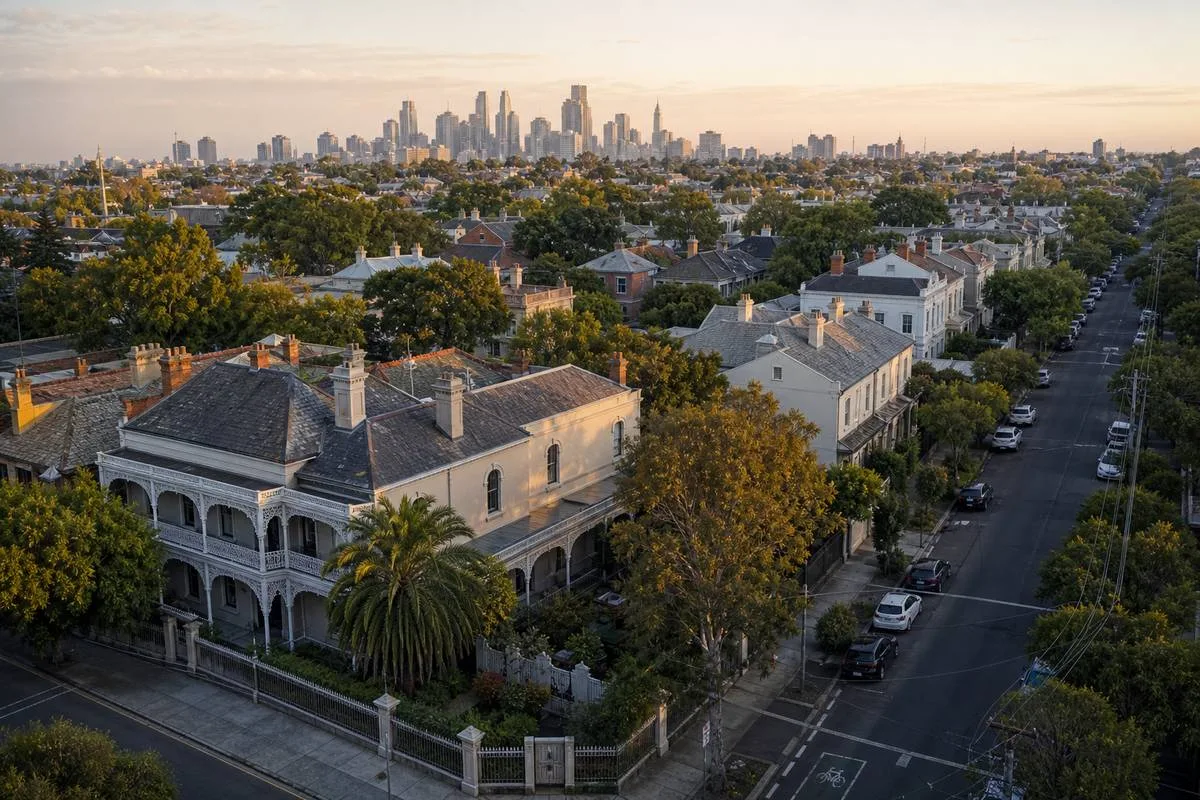
 Building a custom home in Melbourne is one of the most exciting and significant decisions you’ll ever make. But before a single slab is poured or a wall frame erected, there’s a crucial layer of approvals that many homeowners underestimate: the planning permit process. Understanding what triggers a planning permit — and how to navigate it efficiently — can mean the difference between a smooth build timeline and months of costly delays.
Planning Permits vs Building Permits: What’s the Difference?
These two permit types are frequently confused, but they serve very different purposes. A building permit is issued by a registered building surveyor and confirms that your proposed construction complies with the Building Code of Australia and relevant Australian Standards. It’s essentially a technical sign-off on how you’re building.
A planning permit, on the other hand, is issued by your local council and focuses on what you’re building and where — its use, design, siting, and impact on the surrounding area. Planning permits are governed by each council’s local planning scheme under the broader Victorian Planning Provisions.
Importantly, you may need both, either one, or sometimes neither — depending on your site, zone, and overlays. In many straightforward cases on standard residential lots, a building permit alone is sufficient. But in Melbourne’s established suburbs, planning permits are surprisingly common, particularly for custom builds and knock-down rebuilds on character-rich or heritage streetscapes.
Common Triggers for a Planning Permit in Melbourne
Several factors can trigger the need for a planning permit on a residential property. The most common include:
Heritage Overlays (HO)
Melbourne has thousands of properties affected by heritage overlays, particularly in the inner and middle-ring suburbs. If your property sits within a heritage overlay — or is located in a heritage precinct — almost any significant external alteration or demolition will require a planning permit. Council will assess whether the proposed works respect the heritage significance of the site or broader precinct. For a detailed breakdown of what this means for homeowners, our heritage overlays guide for Melbourne homeowners is essential reading.
Neighbourhood Character Overlays (NCO) and Design and Development Overlays (DDO)
These overlays regulate the built form and design of new development to ensure it responds to the established or preferred character of an area. They may dictate requirements around materials, roof pitch, front setbacks, or the proportion of a façade that can be garage doors. Even if your property isn’t heritage-listed, an NCO can still require a planning permit.
Significant Trees and Vegetation
Existing trees on or near a site can be a major planning consideration. Many councils in Melbourne have Significant Landscape Overlays (SLO) or Vegetation Protection Overlays (VPO) that require permits to remove, lop, or build near protected trees. Even without an overlay, some councils have local laws protecting trees above a certain trunk circumference or canopy spread.
Setback and Rescode Variations
ResCode (Clauses 54 and 55 of the Victorian Planning Provisions) sets out standard setback requirements for new dwellings. If your design proposes to vary these standards — for instance, building closer to a side or rear boundary than what ResCode allows — a planning permit may be required to assess whether an alternative setback is appropriate for the neighbourhood context.
The Planning Permit Application Process
Once you’ve determined a planning permit is required, the application process involves several key steps. First, you’ll need to prepare and submit a formal application to your local council, which typically includes architectural drawings, a shadow diagram, a site analysis, and a written response addressing the relevant planning scheme requirements.
After lodgement, council assesses whether the application requires public notice — commonly called “advertising.” If so, notices are placed on site and nearby residents are formally notified, giving them the opportunity to lodge objections or support. This advertising period is usually 14 days.
Following the advertising period, council may request further information, negotiate changes with the applicant, or refer the application to internal departments (such as arborists or heritage advisers). A responsible authority officer then prepares an assessment and either issues a permit, a notice of refusal, or requests further amendments.
As a rough guide, straightforward applications with no objections can be resolved in 6 to 12 weeks. Applications that attract objections or require further information can take 4 to 6 months or longer. Heritage-sensitive applications or those involving significant trees can extend this further. It’s essential to factor planning timelines into your overall project schedule well before you want to begin construction.
Tips for a Smoother Planning Approval
Request a pre-application meeting with council. Most Melbourne councils offer pre-application consultations, either informally or through a formal process. Meeting with a council planner before lodging your application can identify potential issues early, give you a steer on what the council is likely to support, and help you present a stronger application. It also demonstrates good faith with the responsible authority.
Engage early with neighbouring owners. If your application is likely to be advertised, proactively speaking with your immediate neighbours before lodgement can prevent surprises. Explaining your design intentions, addressing their concerns, and showing them the plans often means they have no objection — or even formally support the application. An objection-free application moves significantly faster through the process.
Understand your VCAT rights. If council refuses your application or imposes conditions you disagree with, you have the right to apply to the Victorian Civil and Administrative Tribunal (VCAT) for a review. Similarly, if objectors are dissatisfied with a council approval, they can appeal to VCAT. While VCAT proceedings can add further time and cost, they are sometimes the right course of action — particularly when a refusal is inconsistent with planning policy or similar decisions.
How Different Melbourne Councils Approach Planning
Melbourne’s inner and middle-ring councils are each known for distinct planning cultures that experienced builders learn to navigate carefully.
Boroondara is one of Melbourne’s most rigorous planning jurisdictions. It has a very high proportion of heritage overlays covering entire streetscapes in areas like Camberwell, Hawthorn, Kew, and Canterbury. Boroondara planners have a reputation for thorough assessments and a strong focus on neighbourhood character. Heritage referrals are common, and the council maintains detailed heritage studies that inform decision-making.
Stonnington, which encompasses Toorak, South Yarra, Malvern, and Prahran, is similarly active in heritage protection. The council has a large number of individually significant heritage properties alongside precinct overlays. Stonnington also applies various design and development overlays along key corridors, which can affect new homes on larger or more prominent sites.
Yarra, covering Fitzroy, Richmond, Collingwood, and Abbotsford, applies heritage controls extensively across its older Victorian and Edwardian streetscapes. The council tends to prioritise streetscape contribution and the retention of original fabric, and it’s not uncommon for applications involving significant demolition to receive close scrutiny — even for properties that are not individually listed.
Bayside, covering suburbs like Brighton, Sandringham, and Hampton, has a different character to the inner-city councils but still has significant planning complexity. Significant Landscape Overlays protecting large established trees are particularly prevalent, and the council takes vegetation retention seriously. Design quality and coastal character are also important considerations in certain areas.
Why Involving Your Builder from the Design Stage Matters
One of the most common mistakes homeowners make is separating the design process from the building process — engaging an architect or designer, obtaining a planning permit, and only then approaching a builder. While this sequence seems logical, it can result in a permit being granted for a design that’s difficult or expensive to construct, or one that doesn’t reflect the homeowner’s refined brief.
At Australian Heritage Homes, we’ve been involved in the design and construction of custom homes across Melbourne for over 40 years across four generations. That depth of experience means we understand not just how to build, but how to navigate the planning frameworks that shape what can be built. When you involve us from the outset through our integrated design-build process, we can advise on what’s likely to be well-received by council, flag potential planning triggers before they become delays, and help shape a design that balances your vision with planning reality.
This is particularly valuable on complex sites — those with heritage overlays, vegetation constraints, or challenging topographies. Our team has worked extensively across Boroondara, Stonnington, Yarra, Bayside, and many other council areas, and we know how to present applications that address council priorities clearly and confidently. Whether you’re planning to build a new custom home from the ground up or navigating a more complex planning scenario, having an experienced builder in your corner from day one makes the entire process smoother.
Planning permits are rarely a barrier to a great outcome — they’re simply part of the process. With the right team, the right design, and the right approach, they’re entirely manageable. If you’d like to understand how planning requirements might affect your project, our team is happy to talk through your site and your vision. Explore our full range of custom home building services or get in touch to start the conversation.