
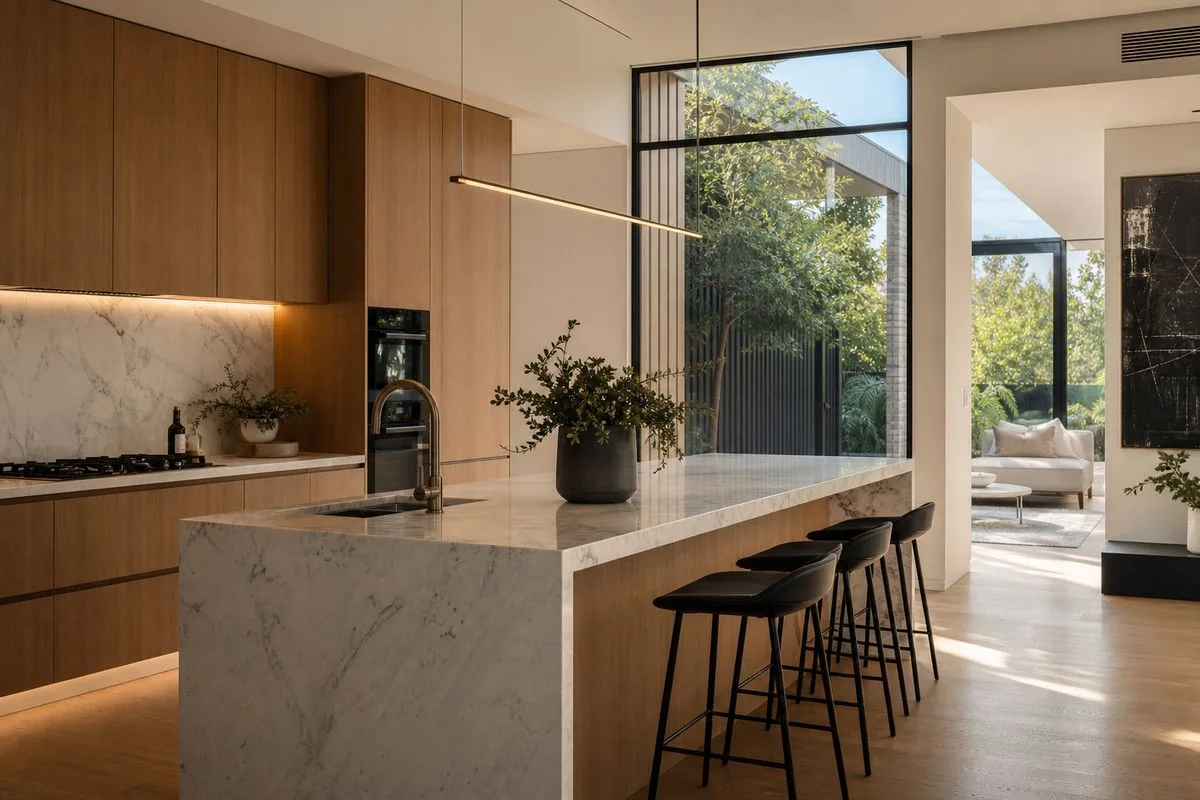
 Building a custom home is one of the most significant investments a Melbourne family will ever make — and one of the most rewarding. Yet without careful financial planning, costs can creep beyond expectations. At Australian Heritage Homes, we’ve guided hundreds of families through the budgeting process over four generations, and we know that a well-prepared budget is the foundation of a stress-free build. Here’s how to approach the numbers with confidence.
Start With Your Total Investment, Not Just the Build Cost
Many first-time custom home builders focus on the construction quote alone, but the true cost of a project includes several additional line items. Beyond the build itself, you’ll need to budget for site costs (soil testing, surveying, demolition if it’s a knock-down rebuild), council permits and planning fees, landscaping, driveways and fencing, window furnishings, and connection of services. A realistic approach accounts for these from day one so there are no surprises later.
As a general guide, site costs and ancillary works can add 10–15 per cent on top of the base construction figure. Your builder should help you map these out during the initial consultation so you’re comparing apples with apples when evaluating quotes.
Understanding What Drives Custom Home Costs in Melbourne
Melbourne’s custom home market spans a wide range, and the cost per square metre varies depending on the level of specification, complexity of design, and site conditions. Key cost drivers include the size and configuration of the home, the quality of fixtures and finishes (think engineered stone benchtops versus laminate, hardwood flooring versus tiles), structural complexity such as double-storey or split-level designs, heritage or overlay compliance requirements, and the slope or soil conditions of your block.
Premium finishes and bespoke detailing — the hallmarks of a true custom home — do cost more than off-the-shelf project home inclusions. However, the long-term value in terms of liveability, durability, and resale potential typically far outweighs the upfront difference.
Building a Contingency Into Your Budget
Every experienced builder will recommend setting aside a contingency fund — typically 5–10 per cent of the total project cost. This isn’t an invitation to overspend; rather, it’s a safety net for unforeseen issues such as discovering rock during excavation, council-requested design amendments, or deciding to upgrade a key finish during the build. Having a contingency means these decisions don’t derail your finances or your timeline.
At Australian Heritage Homes, we provide detailed fixed-price contracts that minimise the unknowns. Our comprehensive quoting process means fewer variations during construction, giving you greater certainty and peace of mind.
Tips to Keep Your Custom Build on Budget
Over more than 40 years of building custom homes across Melbourne, we’ve seen what keeps projects on track — and what causes blow-outs. Here are our top tips:
Finalise your design before construction begins. Changes made on paper are inexpensive; changes made on site are not. Invest time in the design phase to get the floor plan, elevations, and specifications exactly right.
Prioritise where it matters most. Spend on the elements you’ll use every day — the kitchen, bathrooms, and living areas — and economise on spaces where premium finishes won’t be noticed, such as the laundry or garage.
Choose a builder with transparent pricing. Ask for a detailed, itemised quote rather than a lump-sum figure. A reputable custom builder will be happy to walk you through every line item so you understand exactly what you’re paying for.
Consider energy efficiency as a long-term saving. Investing in sustainable design features such as solar panels, double glazing, and high-performance insulation will increase the upfront cost but reduce running costs for decades to come. Think of these as investments, not expenses.
Finance Options for Melbourne Custom Builds
Financing a custom home differs from purchasing an established property. Most lenders offer construction loans, which release funds in stages as the build progresses — known as progress payments. Your broker or lender will typically require council-approved plans, a fixed-price building contract, and evidence of adequate insurance before approving the loan.
It’s worth engaging a mortgage broker who specialises in construction finance early in the process. They can advise on borrowing capacity, help you structure the loan efficiently, and ensure your draw-down schedule aligns with your builder’s payment milestones.
Why Transparent Communication Matters
The best way to stay on budget is to maintain open, honest communication with your builder from start to finish. At Australian Heritage Homes, we schedule regular site meetings, provide fortnightly progress updates, and flag any potential cost implications before they become issues. Our design and build process is structured to give you visibility and control at every stage.
Ready to start planning your custom home budget? Browse our completed projects for inspiration, or get in touch with our team to discuss your vision and receive an obligation-free estimate tailored to your block, your brief, and your budget.