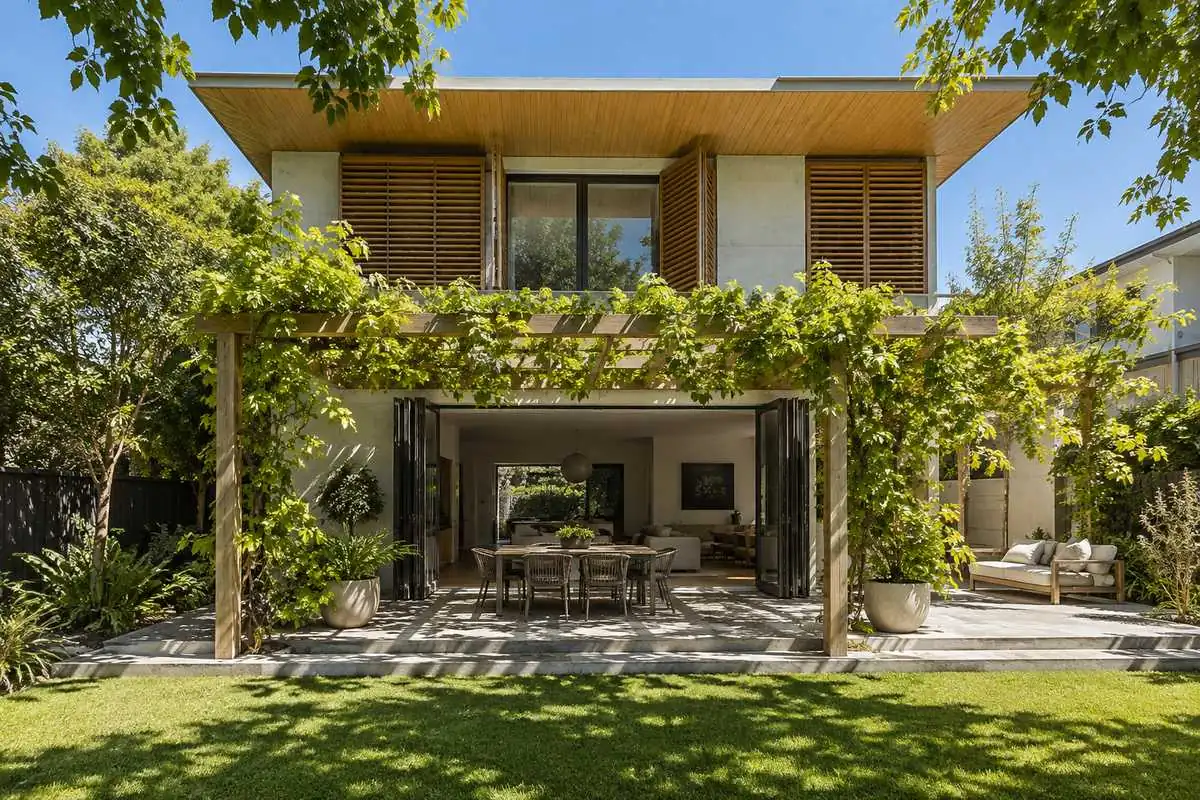
 Melbourne summers are famously unpredictable. A mild 24-degree day can be followed by a scorching north wind and 40 degrees, then a cool change that drops the temperature by 15 degrees in an hour. Homes need to cope with all of it — staying cool through heatwaves without relying entirely on air conditioning.
Earlier this year we wrote about preparing homes for Melbourne winters. With summer approaching, here are the design principles we use to keep custom homes comfortable when the mercury climbs.
1. Stop the Sun Before It Hits the Glass
Glass is the biggest source of unwanted summer heat. Once sunlight passes through a window, much of that heat is trapped inside. The most effective solution is external shading:
- Correctly sized eaves on north-facing windows block high summer sun while letting low winter sun in
- Adjustable external blinds, louvres or shutters on east and west windows, where the sun is low and harder to block
- Pergolas with deciduous vines, which give dense shade in summer and drop their leaves for winter sun
- Verandahs — a feature of so many Victorian and Federation homes for good reason
Internal blinds help, but they stop heat only after it is already inside. External shading can be dramatically more effective.
2. Minimise West-Facing Glass
Late-afternoon western sun is the hardest to manage and often coincides with the hottest part of the day. During design, we place garages, laundries, bathrooms and storage on the west where possible, keeping glazing modest and well-shaded. Our article on passive solar design and orientation explains how orientation sets up a home’s comfort for its entire life.
3. Design for Cross-Ventilation
When that cool change arrives — usually from the south-west — you want to flush hot air out quickly. Openable windows on opposite sides of the home, aligned with prevailing breezes, create natural cross-ventilation. High-level windows, clerestories and stairwell voids help hot air escape through the ‘stack effect’, drawing cooler air in at lower levels.
Secure night ventilation is just as useful. Lockable vents, security screens and sashes that open safely let you cool the house overnight and close up in the morning before the heat builds.
4. Insulate the Roof and Walls Properly
Insulation isn’t just for winter. A well-insulated roof with reflective sarking and a lighter-coloured roof finish can significantly reduce heat entering through the ceiling. Wall insulation, insulated slab edges and well-sealed construction all keep the inside temperature stable. Since Victoria moved to a 7-star minimum energy rating for new homes, these elements are more important than ever.
5. Use Thermal Mass Wisely
Materials like concrete slabs, brick and stone absorb heat and release it slowly. When shaded from summer sun and cooled by night breezes, thermal mass helps keep a home cool during the day. But exposed to direct sun with no way of cooling at night, it can do the opposite. Getting the balance right is part of careful design rather than guesswork.
6. Choose the Right Glazing
Double glazing with low-emissivity (low-e) coatings reduces heat transfer in both directions. On exposed elevations, a glass with a lower solar heat gain coefficient can limit summer heat while still letting in plenty of daylight. Timber or thermally broken aluminium frames complete the package.
7. Landscape for Comfort
Trees, gardens and green walls lower the temperature around your home. A shady tree to the west, permeable paving instead of large expanses of dark concrete, and planted courtyards all create a cooler microclimate. A covered outdoor area also gives you a shaded space to enjoy long summer evenings — see our ideas for outdoor living spaces that work all year round.
8. Efficient Cooling as a Back-Up
Even the best-designed home may need help during a run of 40-degree days. Ceiling fans are inexpensive to run and make a room feel several degrees cooler. Efficient reverse-cycle air conditioning, ideally powered by rooftop solar during the day, can handle the extremes. Because a well-designed home needs less cooling, the system can be smaller and cheaper to run.
Cooling Period Homes Without Losing Character
Many of Melbourne’s older homes already include clever cooling features: high ceilings, verandahs, thick masonry walls and operable sash windows. When we renovate or extend period homes, we work with these features — restoring verandahs, adding roof insulation, upgrading glazing sensitively and designing extensions with proper shading — rather than fighting them.
Build a Home That Stays Comfortable All Year
With more than 40 years and three generations of building in Melbourne, Australian Heritage Homes knows how our climate behaves. Whether you’re planning a new custom home, a knock-down rebuild or a renovation, we’ll design it to stay comfortable through every season. Learn more about our sustainable home design or get in touch to start the conversation.