 For generations, gas has been the default in Melbourne homes — gas ducted heating, gas hot water and a gas cooktop in the kitchen. That is changing quickly. Victoria’s policy settings now favour all-electric homes, and for most new builds that require a planning permit, a new gas connection is no longer an option.
If you’re planning a custom home, knock-down rebuild or major renovation, here is what going gas-free means in practice, and why many of our clients see it as an upgrade rather than a compromise.
What Are the Rules for New Homes?
From 1 January 2024, the Victorian Government changed planning rules so that new homes and residential subdivisions requiring a planning permit cannot connect to the reticulated gas network. Since then, all-electric has become the standard for most new builds in Melbourne. Rules continue to evolve, so we always confirm the current requirements for your property and permit pathway early in the design stage.
Alongside this, Victoria’s minimum energy rating for new homes rose to 7 stars under NatHERS from May 2024, together with a whole-of-home energy assessment that considers the appliances you install. Efficient electric appliances, combined with good design, make these targets easier to reach.
Heating and Cooling: Reverse-Cycle Heat Pumps
The biggest change for most Melbourne households is heating. Modern reverse-cycle systems — whether ducted, split systems or hydronic heat pumps — move heat rather than generating it, so they can deliver several units of heat for every unit of electricity used. They also provide cooling in summer from the same system.
For homeowners who love the gentle warmth of hydronic radiators or slab heating, air-to-water heat pumps can replace a gas boiler. In period-style homes we often combine discreet ducted systems with hydronic panels in key rooms so the interiors stay uncluttered and authentic.
Hot Water: Heat Pump Systems
Heat pump hot water systems work like a fridge in reverse, drawing heat from the surrounding air. They are far more efficient than conventional electric storage units and can be timed to run in the middle of the day when rooftop solar is producing the most energy. We plan their location carefully so they are close to bathrooms and kitchens but out of sight of the street and away from bedrooms.
Cooking: The Induction Upgrade
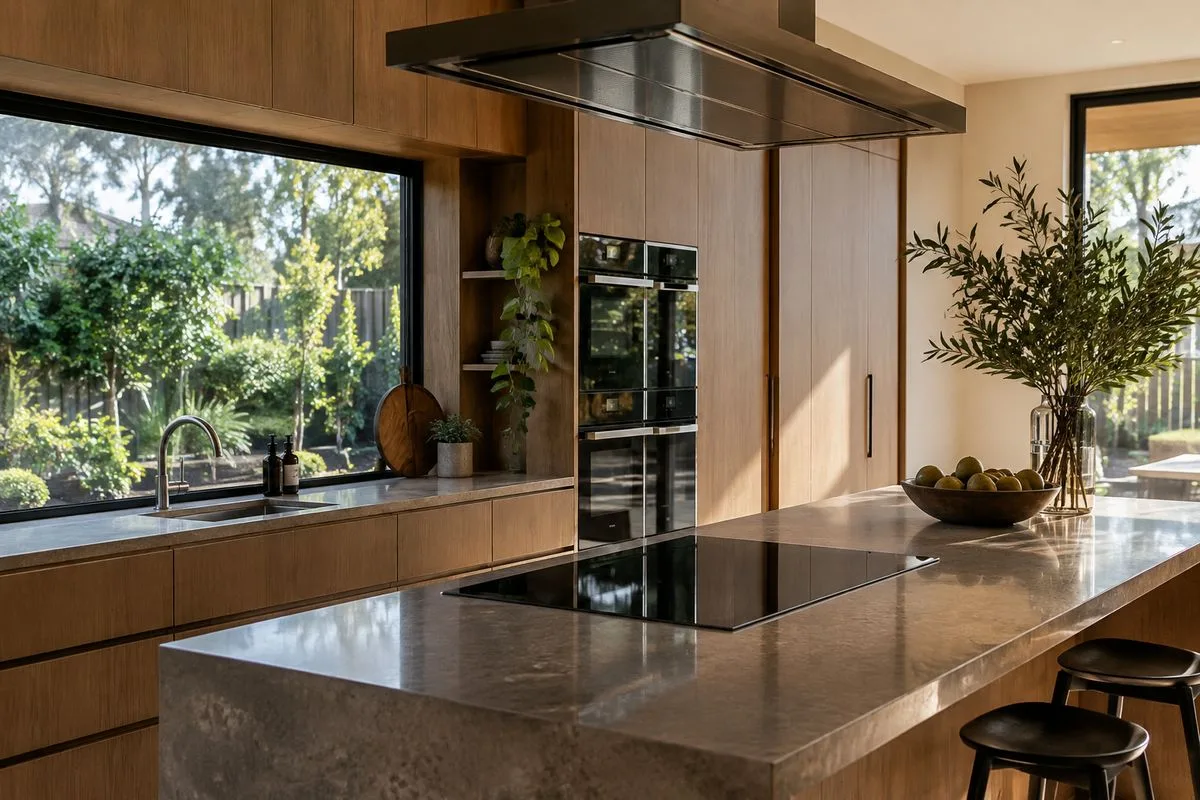
Many keen cooks are nervous about giving up gas, but induction usually wins them over. Induction cooktops heat the pan directly, respond instantly, are easy to clean and don’t add combustion by-products to the air inside your home. For a deeper look at kitchen planning, see our article on designing your dream kitchen.
Solar Panels and Batteries
An all-electric home pairs naturally with rooftop solar. During design we consider roof orientation, pitch and shading so there is a generous, uninterrupted area for panels — ideally north-facing, with east and west faces as useful additions. Many clients also plan for a home battery and electric vehicle charging, even if they install them later. Running conduit and allowing switchboard capacity during construction is far cheaper than retrofitting.
On heritage-sensitive sites, panel placement matters. Councils generally prefer solar panels that are not visible from the street, so rear-facing roof planes and lower extensions are often the best locations.
Design Comes First
Efficient appliances are only half the story. The most cost-effective energy is the energy your home never needs. Good orientation, insulation, airtightness, double glazing and shading reduce the size of the heating and cooling system you need and keep running costs low. Our guide to energy-efficient custom homes covers these fundamentals in detail.
Can Heritage and Period Homes Go All-Electric?
Absolutely. We regularly help owners of Victorian, Edwardian and Federation homes transition away from gas as part of a renovation or extension. Gas heaters in old fireplaces can be replaced with electric inserts or simply restored as decorative features, while new heating is concealed in floors, ceilings or joinery. The character stays; the gas bills go.
Common Questions We Hear
- Will my power bills go up? With efficient heat pumps, good insulation and solar, many all-electric households pay less overall — especially as there is no gas supply charge.
- Is a heat pump warm enough for a Melbourne winter? Yes. Modern systems are designed to operate efficiently in our climate, provided they are correctly sized.
- What about blackouts? A battery with backup capability can keep essential circuits running during an outage.
Planning Your All-Electric Custom Home
As a third-generation family builder with more than 40 years in Melbourne, we’ve seen building standards change many times. Going all-electric is one of the most positive shifts yet, delivering healthier, more comfortable homes that are ready for the future. Learn more about our sustainable home design and construction, explore our design and build process, or contact our team to start planning.