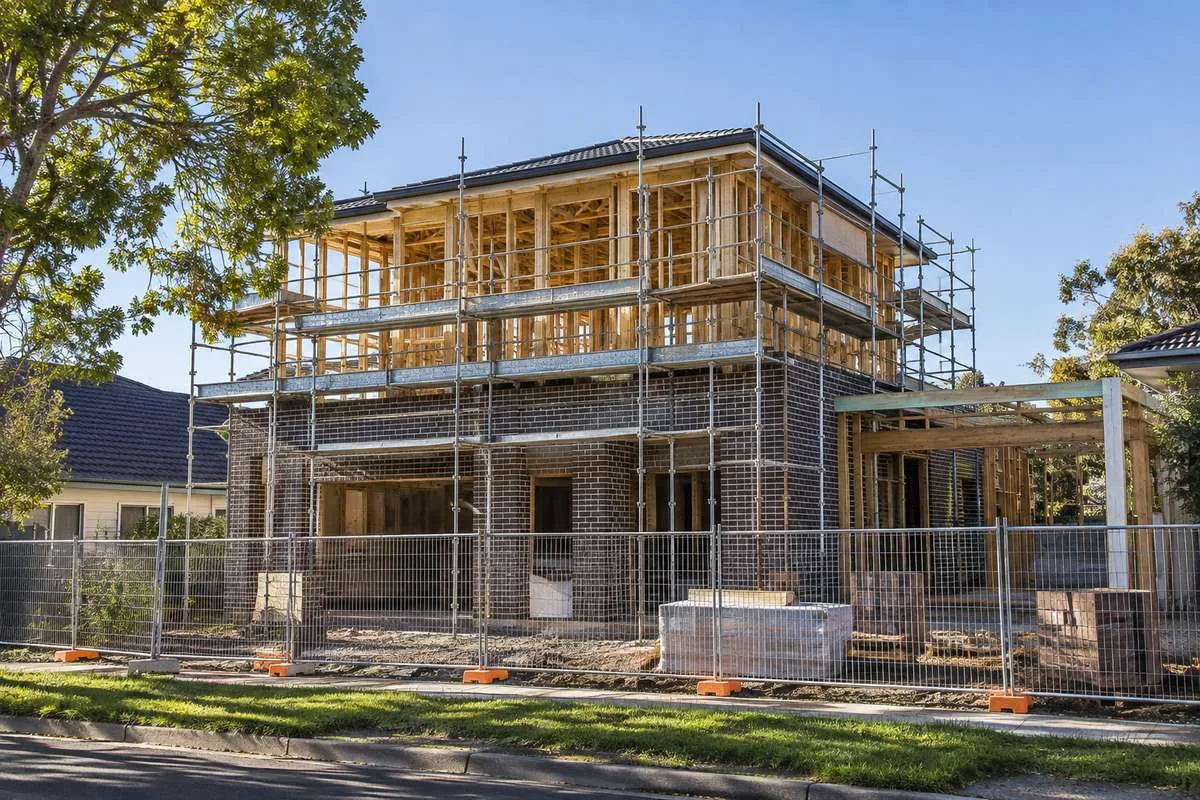
 A knock-down rebuild lets you stay in the street and suburb you love while getting a home designed entirely around your family. But one of the first questions every client asks us is: how long will it take?
The honest answer depends on your block, council and design – but there’s a predictable sequence. Drawing on three generations and more than 40 years of building in Melbourne, here’s a realistic overview of a knock-down rebuild timeline with Australian Heritage Homes.
Stage 1: Feasibility and Design (2–4 months)
Before anything is demolished, we confirm what’s possible on your site. This includes checking zoning, overlays, easements, title restrictions and any heritage controls – particularly important in councils like Boroondara, Glen Eira and Stonnington, where demolition itself may need a permit.
Then comes design: concept sketches, refinements and working drawings. Site surveys, soil tests and engineering are completed during this stage. Taking time here saves time later. Our design and build process explains each step in detail.
Stage 2: Permits and Approvals (1–6+ months)
This is the most variable stage. A straightforward home that complies with ResCode may only need a building permit. Where a planning permit is required – for heritage overlays, neighbourhood character controls or multiple dwellings – timeframes can stretch considerably, especially if objections are lodged. Our article on preparing your build project covers how to get permits and selections moving early.
You’ll also need a demolition permit, and service disconnections (gas, electricity, water, NBN) must be arranged with each provider. These can take several weeks, so we start them early.
Stage 3: Moving Out and Demolition (4–8 weeks)
Once permits are in hand, you’ll move into temporary accommodation. Many families rent nearby to keep school and work routines stable. Allow time for:
- Service abolishment and meter removal
- Asbestos inspection and licensed removal – common in homes built before 1990
- Demolition and site clearing, typically one to two weeks
- Tree protection measures where required by council
Stage 4: Construction (9–14 months)
Construction timeframes depend on size, complexity and finishes. A single-storey home is generally quicker than a two-storey home with detailed heritage features. Typical milestones are:
- Site preparation and slab or footings: 4–8 weeks
- Frame and roof: 6–10 weeks
- Lock-up (windows, external doors, cladding or brickwork): 8–12 weeks
- Fixing (plaster, joinery, cabinetry, tiling): 10–14 weeks
- Practical completion (painting, fit-off, landscaping, final inspections): 6–10 weeks
Melbourne weather plays a part – extended wet periods can slow slab and frame stages, which is why many clients aim to start in spring.
Stage 5: Handover and Beyond
Once the occupancy permit is issued, we walk you through your new home, explain its systems and hand over the keys. Our relationship doesn’t end there – we remain available through the defects liability period and beyond.
How to Keep Your Timeline on Track
- Make selections early: late changes to tiles, fittings or joinery are a common cause of delays.
- Choose a builder who handles approvals: experience with council processes makes a real difference.
- Budget for contingencies: unexpected soil conditions or asbestos can add time and cost.
- Plan your accommodation generously: a flexible lease avoids pressure if things shift.
Is a Knock-Down Rebuild Right for You?
A rebuild typically takes 15–24 months from first meeting to keys – but you gain a home that’s energy-efficient, built to your needs and designed to last. If your home is heritage-protected, a renovation or extension may be the better path. Explore our featured projects or learn about crafting your dream home, then get in touch with Australian Heritage Homes to plan your rebuild.